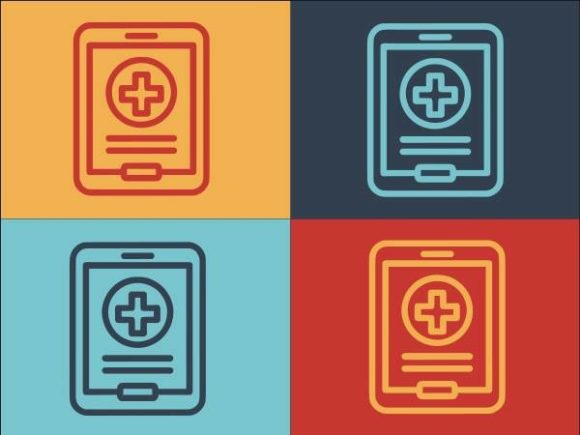
Reviewing Mobile Medical Card for Embroidery Use
As a designer who has spent years translating digital concepts into thread, I approach every new Graphics asset with a specific set of questions. Will this hold up under the needle? Does the line work survive the transition from screen to fabric? Today, I am evaluating Mobile Medical Card, a logo template that promises elegance and modern versatility. While it is marketed primarily as a digital design asset compatible with tools like Inkscape and Adobe Photoshop, my focus is strictly on its potential as a foundation for real-world embroidery projects.
First Impressions: Mood and Visual Personality
The first thing you notice about Mobile Medical Card is its clean, structured aesthetic. It does not scream for attention with chaotic elements; instead, it relies on balanced proportions and a contemporary feel. For an embroidery designer, this is often a double-edged sword. Clean lines look fantastic in vector previews, but they require precise digitizing to maintain their integrity when stitched. The design feels professional, suggesting trust and care—qualities essential for medical-themed or wellness-oriented branding. It creates a mood of reliability, which is exactly what clients want when they commission custom apparel or branded merchandise.
When I visualize this design on a finished product, I see it working best where clarity is paramount. It is not a busy applique design filled with tiny, fragile details that might get lost in thick pile fabrics. Instead, its strength lies in its bold, recognizable shapes. This makes it a strong candidate for logos that need to be read quickly, whether on a uniform or a promotional item.
Real-World Application: From Digital File to Stitched Product
To truly test the viability of Mobile Medical Card, I imagined a recent client request: a local clinic wanted branded tote bags for a community health fair. They needed something that looked professional but also friendly. Using this design as the core visual element, I considered how it would translate into a tote bag design. The sturdy canvas of a tote bag provides an excellent surface for medium-density stitching. Because the design is described as versatile, it allows for scaling without losing its core identity, provided the digitizer respects the original proportions.
Beyond tote bags, this design has significant potential for sweatshirt embroidery. A left-chest placement on a high-quality fleece or cotton blend would look sharp. The modern style fits well with current trends in minimalist custom apparel. For Etsy sellers and small shop owners, this type of clean Logos graphic is invaluable. It can be easily adapted for personalized gift items, such as nurse appreciation gifts or medical student graduation presents. The key here is not just the image itself, but how it communicates value. A crisp, well-stitched logo elevates a simple garment into a premium handmade product.
Technical Considerations for the Embroiderer
While the visual appeal is strong, we must address the technical realities of turning a vector SVG into a machine embroidery design. The source file is an SVG, which is great for editing in design software, but it is not an embroidery file ready for your machine. You will need to digitize it or convert it carefully. Here are the critical factors I evaluate before committing to a project:
- Stitch Density and Type: Look at the curves in Mobile Medical Card. These areas will likely require a fill stitch to cover the fabric adequately. However, avoid making the density too high, especially if you are stitching on stretchy fabrics like jersey knits, as this can cause puckering. Use a running stitch for fine outlines if the detail allows, but ensure it is secure enough not to unravel after washing.
- Hoop Size Constraints: Always check your hoop size against the scaled design. If you are placing this on a embroidered patch or a cap, space is limited. Ensure that any text elements within the logo remain legible at smaller sizes. Tiny lettering often merges together when stitched, so simplification might be necessary for small applications.
- Fabric Texture and Contrast: This design relies on clear shapes. On textured fabrics like terry cloth towels or rough denim, fine details can disappear. Test the design on scrap fabric first. Also, consider thread colors carefully. High contrast between the thread and the fabric is essential for readability. A dark thread on a dark fabric will render the design invisible, no matter how elegant the original vector was.
- Stabilizer Selection: For a professional finish, the right stabilizer is non-negotiable. For woven fabrics like cotton twill used in aprons or bags, a cut-away stabilizer provides lasting support. For knits, a tear-away might suffice for light designs, but given the potential for fill stitches here, a cut-away is safer to prevent distortion over time.
Navigating Potential Pitfalls
There are scenarios where Mobile Medical Card requires caution. If you are working on curved surfaces like caps, the rigid geometry of the logo might distort if not hooped correctly. Use a framing technique or a specialized cap driver to keep the fabric taut. Additionally, be wary of using this design on very thin or slippery fabrics without proper backing, as the needle penetration can cause shifting.
Another common issue with modern, minimalist designs is the expectation of perfection. Customers often scrutinize clean lines more heavily than complex, busy patterns. Any misalignment or thread breakage is immediately obvious. Therefore, quality control is vital. Inspect small details closely before trimming jump threads. If the design includes tight corners, ensure your digitizing software has optimized the turn points to prevent bird nests or loose loops.
Commercial Viability and Brand Consistency
For craft business owners, the versatility of Mobile Medical Card is a major asset. It can serve as the centerpiece for a wide range of commercial embroidery projects. Whether you are creating uniforms for a healthcare startup or branded merchandise for a wellness blog, the design conveys professionalism. This builds customer trust. When a buyer sees a well-executed logo on a baby embroidery item or a kitchen towel, they perceive higher value. It suggests that the maker cares about precision and quality.
Furthermore, this design works well for printable mockup creation. Before you even stitch a single thread, you can place the SVG into a mockup to show clients how the final finished product will look. This helps manage expectations and secures approvals faster. Just remember to verify the licensing terms. Since the product description mentions it is "ready to print" and includes SVG files, ensure that your intended commercial use—selling physical embroidered goods—is permitted by the creator. Some licenses allow personal use only, while others extend to commercial sales of physical items but not digital redistribution.
Final Verdict for Designers
Mobile Medical Card is a solid choice for designers looking for a modern, clean aesthetic. It is not just a pretty picture; it is a functional design asset that, when handled with technical skill, can produce stunning results. It fits naturally into the workflow of an Etsy seller or a boutique decorator who values clarity and style. By paying attention to stitch density, fabric choice, and stabilizer support, you can transform this digital graphic into a tangible, high-quality embroidery project that stands out in the marketplace. Always test on scraps, respect the limitations of your machine, and let the clean lines of the design speak for themselves.